Vindelfjällen Nature Reserve: Sweden’s Arctic Wilderness at Its Finest
Vindelfjällen Nature Reserve is one of Europe’s largest protected wilderness areas — a vast, untouched landscape of mountains, valleys, ancient forests and Arctic tundra. For anyone travelling through Swedish Lapland, especially on a multi‑day husky tour, Vindelfjällen offers a rare chance to experience true wilderness.
Fast Facts About Vindelfjällen Nature Reserve
Size: Approximately 5,600 km², making it one of the largest protected nature reserves in Europe.
Established: 1974
Location: Västerbotten County, Swedish Lapland
Highest Peak: Norra Storfjället, reaching around 1,768 meters
Landscape Types: Alpine mountains, birch forests, mires, river valleys, tundra plateaus
Key Areas: Ammarnäs, Hemavan, Tärnaby, Syterpasset, Artfjället, Björkfjället
Famous Trails: Kungsleden (The King’s Trail) runs directly through the reserve
Protection Status: Strict nature reserve with regulated motorized access
Vindelfjällen’s sheer size means you can travel for days without seeing a road, a house or even another person — a rarity in Europe.
What Makes Vindelfjällen Special
Vindelfjällen has been shaped over millions of years by glaciers and geological forces. The area has mountains, valleys, lakes, rivers, and some of Sweden’s deepest caves. Many rivers run freely without dams, keeping the environment natural and untouched. It’s a place where the landscapes feel truly wild and untouched. What makes it even more special is the living culture here – traditional Sámi life and reindeer herding are still a part of everyday life, giving anyone who visits a real sense of the region’s history and its people.
Wildlife of Vindelfjällen
Vindelfjällen is home to some of Scandinavia’s most iconic Arctic species. The wildlife here is adapted to harsh winters, deep snow and short summers.
Large Mammals
Moose — frequently seen in valleys and birch forests
Reindeer — both wild and semi‑domesticated, herded by Sámi communities, can be sometimes seen on our tours
Brown bear — present but rarely seen and in hibernation during the winter
Wolverine — elusive and protected
Arctic fox — one of the reserve’s most important conservation species
Vindelfjällen is a paradise for bird enthusiasts to watch the Golden eagle, Ptarmigan or Snow bunting. Wetlands and mires attract migratory birds in summer, while winter brings hardy species that thrive in the cold.
Plants & Vegetation
The vegetation shifts dramatically with altitude:
Mountain birch forests dominate lower elevations
Arctic tundra plants such as mosses, lichens and dwarf shrubs cover higher plateaus
Rare alpine flowers bloom during the short summer
Cloudberries and lingonberries grow in the mires
The reserve’s plant life is fragile — many species grow slowly and are easily damaged by motorized traffic, which is why protection rules are strict.
History of Vindelfjällen
9,000 Years of Human Presence in Vindelfjällen
As the inland ice retreated from the Scandinavian mountains, exposing new land that early hunters and fishers quickly began to use. As the climate warmed, people moved inland from the Atlantic coast, following rivers and valleys into what is now Vindelfjällen.
Archaeological finds at Rasteklippan by Lake Tärnasjön — flint flakes, arrowheads and a hearth dated to about 8,000 years before present — show that small groups used the area seasonally, likely following migrating animals and fishing in the lakes. Along the mountain edge, prehistoric dwelling sites suggest temporary winter camps.
By the Iron Age, the Sámi presence becomes clear. Some of the oldest remains linked to Sámi settlement are the stalotomter — oval or circular stone foundations marking early Sámi dwellings. These sites highlight a long, continuous connection between Sámi communities and the Vindelfjällen landscape.
For millennia, people have lived, hunted and travelled through this region. Today, Vindelfjällen protects both its Arctic ecosystems and this deep cultural heritage shaped by ice, wildlife and generations of human presence.
How Glaciers Shaped the Vindelfjällen Landscape
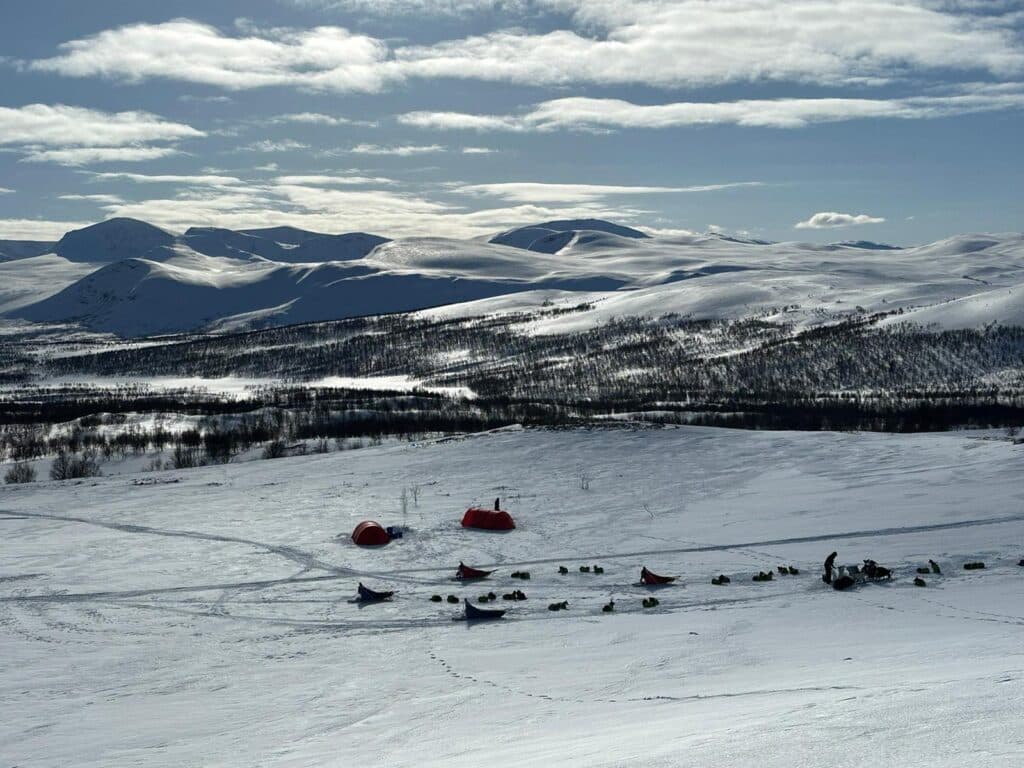
The landscape of Vindelfjällen was shaped by the last Ice Age, when massive glaciers carved deep valleys, rounded mountain tops and left behind the wide plateaus that define the region today. As the inland ice slowly retreated around 9,000 years ago, meltwater sculpted river systems, exposed ancient bedrock and created the mosaic of alpine terrain, birch forests and wetlands we see now. Moraines, glacial lakes and U‑shaped valleys still mark the traces of the ice, making Vindelfjällen a textbook example of how powerful glacial forces formed the Scandinavian mountain environment.
Protection and Expansion of the Nature Reserve
Concerns about hydropower development along the Ume and Vindel rivers in the 1950s sparked the first discussions about protecting the mountain region. Vindelfjällen Nature Reserve was established in 1974 and confirmed by the government in 1975, with a management plan adopted in 1978. An old‑growth forest inventory in the 1980s identified valuable untouched forests, leading to new protected areas such as Kirjesålandet, Matsorliden and Giertsbäcksdalen in 1988, and Mattanberget in 1991. The reserve was expanded again in 2017, adding 8,600 hectares of old‑growth forest in Akkan, Arvliden, Guorbåive, Matsorliden, Raningsberget and parts of Kraddsele — strengthening Vindelfjällen as one of Europe’s largest protected wilderness areas.
Outdoor Adventures in Vindelfjällen

Vindelfjällen has something for everyone who loves the outdoors. In summer, you’ll find trails for all levels, from short hikes to multi‑day treks through mountains and valleys. A highlight is the beginning of the famous Kungsleden, the classic long‑distance trail between Hemavan and Abisko, known for its birch forests, open plateaus and views of Norra Storfjället. In winter, parts of the trail become a popular ski route with wide, snowy terrain. The landscape is perfect for cross‑country skiing, snowshoeing, and for those seeking real adventure, our dog‑sledding tours. Travelling through the wilderness with a team of huskies is unforgettable. Rivers and lakes remain beautiful year‑round, offering fishing and paddling in the warmer months. Outdoor experiences in Vindelfjällen are truly possible in every season.
Exploring the Vindelfjällen Nature Reserve by dog sled
We want to show you the nature reserve at its best. Even on our shortest tour, the Husky Safari, we head straight into Kirjesålandet, one of the most beautiful and quiet areas in Vindelfjällen. Far from traffic and towns, you explore the landscape together with our sled dogs. The Next Level Adventure Tour takes you higher into the mountains, following remote routes and travelling through wide, open terrain. And for those who want the full wilderness experience, our Wilderness Expedition goes deep into Vindelfjällen, far beyond the beaten track. On this tour we often don’t meet another person for days, and we sleep in tents out on the trail — a simple, unforgettable way to experience the reserve in its purest form.

Why Vindelfjällen Matters
Vindelfjällen is more than a nature reserve — it is one of Europe’s last true wildernesses. Its vastness, silence and raw beauty make it a place where travellers can disconnect from the modern world and reconnect with nature in its purest form.
For anyone joining a husky safari, Vindelfjällen becomes not just a destination, but a memory: the crunch of snow under the runners, the breath of the dogs in the cold air, the endless horizon of mountains and the feeling of being part of something ancient and untouched.
Ready to explore Vindelfjällen in a unique way? Combine your love for nature with an unforgettable husky sledding experience – book your adventure with Petter Karlsson Sleddogs today!